

Seeing through a Scar
How Our View of Ourselves Can Scar Us Most

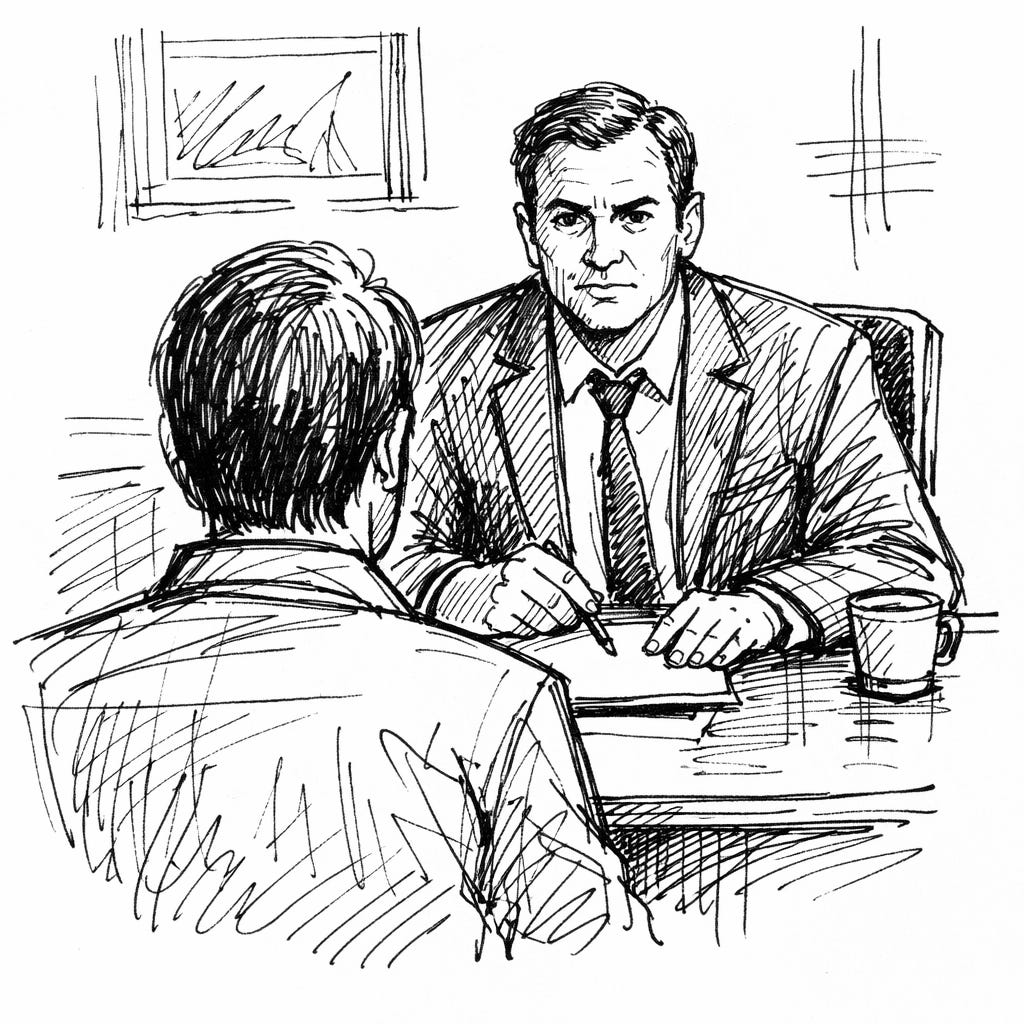
I remember being about ten years old, walking into a room, and meeting one of my older brothers face to face.
He snapped, “What are you looking at? You can’t tell? Why are you looking at me like that?”
I froze. I wasn’t looking at anything. I wasn’t thinking anything. I honestly had no idea what he meant. I was just . . . there.
And then I learned what was really happening: he had hidden something on himself—some prop, some prank, some little secret—and he had hidden it so well that I was perfectly unaware of it. But he was aware. And that awareness became a lens. It turned my neutral face into accusation. It turned my ordinary eyes into scrutiny. It turned my normal presence into threat—like I was “spoiling” the stunt before it ever began.
That moment stayed with me, because it exposed a disturbing truth about the human heart: we often don’t see people as they are—we see them through what we believe about ourselves. We take the criticisms we fear, the judgments we whisper in our own mind, and we assign them to the faces across the room. Then we blame others for the very shame we can’t let go.
Scripture says it like this: “The wicked flee when no one pursues” (Prov. 28:1).
Recently, I reread a study from Dartmouth (early 1980s) that dialed in on this exact dynamic.
The researchers brought participants in and applied a noticeable facial “scar” to their faces—the kind of theatrical makeup used in film. The scar was convincing. The participant saw it in a mirror. The participant felt marked. Then they were sent into a short conversation or interview, and afterward they were asked to report how the “scar” affected the other person’s behavior—whether the interviewer seemed uneasy, distant, patronizing, tense, awkward, avoiding eye contact.
And one after another, the “scarred” participants came out confident: It changed the whole encounter. They could tell. They read the micro-signals. The scarred people saw the others’ flinch, the discomfort, the subtle shift.
But here’s the twist—the part that makes the whole thing unforgettable.
Right before the participant walked into the interview, the experimenter said he needed to “moisturize” the scar so it wouldn’t crack. In the process, he removed it—completely—without the participant’s knowledge.
No scar. No disfigurement. No mark.
The person across the table never actually saw anything unusual. There was nothing to react to.
And yet the participant still walked into the room as a scarred person—in their own mind. They still carried the identity. So they interpreted everything through it. Ordinary pauses became discomfort. Normal eye contact became staring. Neutral glances became judgment. The scar had been removed from the face—but it remained in the perception.
The study’s language is blunt: when people believe they carry a negatively valued mark, they “find” strong reactivity to it—even when the other person does not perceive the mark at all. The effect isn’t necessarily in the other person. The effect is in the lens.
This explains so much.
It explains why two people can walk out of the same conversation and give completely different reports. One says, “She was cold.” Another says, “She was kind.” One says, “He was judging me.” Another says, “He seemed tired.” It’s almost comical how little we agree on what we “saw.”
We don’t all notice the same things. We don’t all read the same signals. Some people can identify a stranger by a blue blouse; others wouldn’t remember the color if their life depended on it. Some notice graying hair; others couldn’t tell you if the man had hair at all.
But the most dangerous “description” is not the one someone else puts on you.
The most debilitating label is the one you put on you.
Because once you accept it—once you believe the scar is there—you will start seeing proof of it everywhere. You will walk into rooms already braced for rejection. You will interpret tone through fear. You will audit every glance. You will turn normal human ambiguity into a verdict. And the tragedy is this: even if God has already healed the wound, you can still live as if the wound is defining you.
This is the scar-removed paradox: the mark is gone, but the mind keeps checking for it.
And this is where the gospel is not merely comfort—it is deliverance.
Paul says we “behold . . . as in a mirror” (2 Cor. 3:18). And he says, “Now we see in a mirror dimly, but then face to face” (1 Cor. 13:12). Which means: we are always looking into something. We are always receiving an image. We are always being shaped by the reflection we accept.
So the question becomes: Which mirror is discipling you?
There is an old mirror—held up by the accuser, by memory, by shame, by the “former self.” It keeps offering you the same familiar face: marked, ruined, disqualified, forever explainable by your worst moment. And if you keep looking into that mirror, you will keep walking into conversations as the person you used to be—even when the scar has been removed.
And sometimes the mirror is held up by other people, too—not to call you into what you can become, but to freeze you in what you once were. Not to heal, but to condemn. Not to restore, but to keep you manageable.
But there is another mirror: the face of the Father revealed in Jesus Christ. The perfect law of liberty. The word of grace. The verdict of adoption. The cleansing that is not symbolic but real.
You can give your scars power.
You can superimpose them onto every new opportunity, every new relationship, every new room you walk into, until the loudest thing in your life is the old wound and the identity it left behind.
Or you can choose a different confession: a declaration of redemption.
I am not who my wound says I am.
I am not who my shame says I am.
I am not who my past says I am.
I am who He says I am.
And when you start believing that—really believing it—you begin to see something else: the gleam of grace in forgiving faces. The faithful strength of friends who don’t keep re-reading your old file. The steady, un-panicked love that refuses to define you by your failure. You begin to “walk into” the expectations of mercy. You begin to live like someone who has been washed.
This does not erase the truth that you were wounded.
It replaces the lie that the wound is your identity.
Not Scarface—redeemed.
Not marked—made new.
Not condemned—adopted.
Not defined by what you did—defined by what He has done.
So stop and consider—slow down long enough to actually weigh it—the nature, caliber, quality, and power of love the Father has poured out on us: that we should be called children of God (1 John 3:1).
Children. Not suspects.
Children. Not outcasts.
Children. Not walking explanations of our worst chapter.
Children—begotten, washed, accepted, and being formed day by day into His likeness . . . especially in the way we learn to love, the way we learn to see, and the way we refuse to assign to others the accusations we once believed about ourselves.
Thank you for this beautiful and timely message.
“The Spirit himself bears witness with our spirit that we are children of God.”
Rom. 8:16